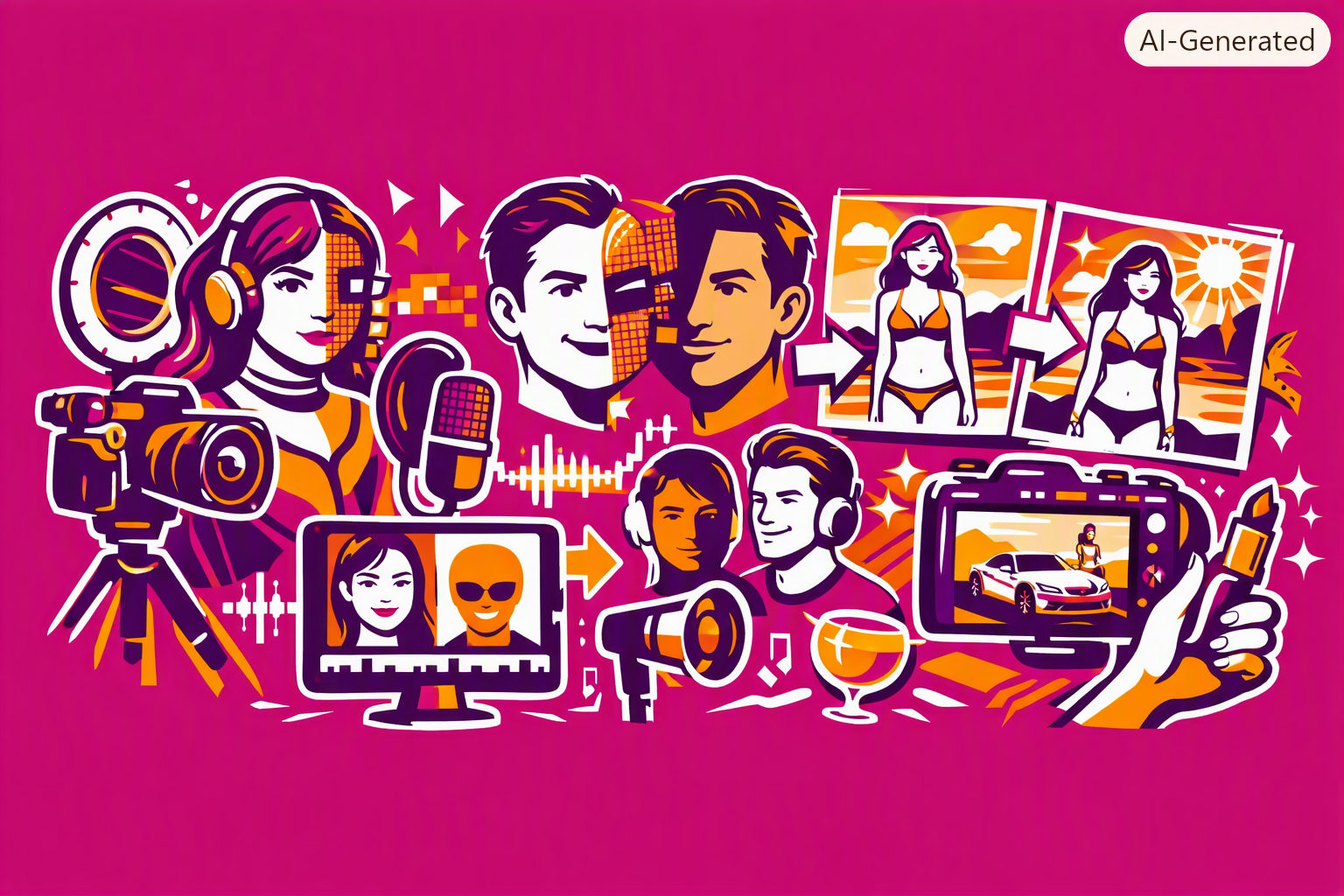
Starting August 2, 2026, new transparency requirements under the EU AI Act come into effect. This does not mean that every AI‑generated text or image must be labeled. What matters are the content itself, its potential to mislead, the publication context, and who holds responsibility.*
What role does an agency play?
An agency is typically considered an operator when it independently uses AI systems for client projects. If the agency provides its own AI system or markets an AI system as its own, it may additionally be classified as a provider, which comes with further technical obligations.
The obligations that apply to both agency and client depend on the actual distribution of tasks and responsibilities — not solely on what the contract says.
When is disclosure required?
Deepfakes
AI-generated or manipulated images, videos, and audio files must be disclosed if they depict existing or plausibly real persons, places, objects, or events and could misleadingly appear authentic or true.
For agencies, particular attention should be given to the following cases:
- virtual testimonials and AI influencers
- synthetic voices or avatars of real people
- Face-Swaps
- manipulated before‑and‑after representations
- artificially generated product or event depictions that appear to be real recordings
Clearly fictional illustrations, fantasy worlds, or obviously artificial brand characters are generally not considered deepfakes. For artistic, creative, satirical, and fictional works, a simplified disclosure applies, which must not unduly interfere with the enjoyment of the work.
Texts on matters of public interest
Published AI‑generated texts must be disclosed when they are intended to inform the public about matters of public interest. Ordinary product descriptions, landing pages, ads, newsletters, social media captions, and SEO content are therefore generally not subject to disclosure solely because AI was used. The situation may differ for advertorials, informational campaigns, or content that appears editorial — especially when addressing politics, health, finance, the environment, consumer protection, or science.
Disclosure is not required when the text has been substantially reviewed or editorially controlled by a human, and when a natural or legal person assumes editorial responsibility. A mere spelling, style, or superficial plausibility check is not sufficient. This exception does not apply to deepfakes.
Chatbots and virtual assistants
For website chatbots, voicebots, and virtual product advisors, it must be clear from the very first interaction that the communication is taking place with an AI system — unless this is already obvious.
Suitable notices include, for example:
- “You are communicating with our AI assistant.”
- “This chat is operated by an AI system.”
- “AI‑powered virtual product advisor”
Agencies should ensure that the disclosure is actually displayed in the specific implementation and not obscured by design or branding. If emotion‑recognition or biometric categorization systems are used in marketing, affected individuals must also be informed about their operation. In addition, data‑protection law and potential prohibitions under the AI Act apply.
How must disclosures be presented?
The disclosure must be clear, understandable, distinguishable, and accessible without barriers. It must be provided no later than at the first moment the content is perceived or at the beginning of the first interaction.
Possible formulations include:
- “AI‑generated”
- “AI‑created depiction”
- “Image has been modified using AI.”
- “Voice has been artificially generated.”
A general notice placed in the legal disclosure section or solely within technical metadata is not sufficient for content that requires explicit labeling. Platform‑provided labels may be adequate if they are timely, clearly visible, and factually accurate. The voluntary EU labeling symbols may also be used.
Providers of generative AI systems must also mark outputs in a machine‑readable manner as a general rule. For typical agencies, this becomes relevant primarily when they provide their own AI systems or systems offered under their brand. For systems already on the market before 2 August 2026, a limited transition period applies until 2 December 2026.
Our recommendations for agencies:
- Contractually define responsibilities for review, approval, and publication.
- Substantially review publicly relevant texts and document the review.
- Assess testimonials, avatars, AI influencers, and before‑and‑after images with particular care.
- Place required disclosures directly alongside the content.
- Make the AI disclosure visible from the very beginning of any chatbot interaction.
- Additionally review personality rights, usage rights, data protection, as well as competition and consumer law.
A disclosure does not automatically make content lawful. Fabricated testimonials, false advertising claims, missing consents, or misleading product representations remain problematic even when accompanied by an AI label.
* *This summary is intended for general guidance and does not constitute legal advice. The assessment depends on the specific AI system, the content, the allocation of responsibilities, and the publication context. In cases of uncertainty, we recommend obtaining expert legal review.
Source reference: